Epilepsy and Seizures
Make an Appointment
Our team of dedicated access representatives is here to help you make an appointment with the specialists that you need.
About 10 percent of all people, approximately eight million Americans, may experience a seizure during their lifetimes. It is estimated that one to three percent of the population has recurrent seizures, or epilepsy, or seizure disorder.
There are many different types of epilepsy that are distinguished by causes, extent, and effects. Among these, there are two major types of epilepsy: generalized epilepsy, in which seizures affect the entire brain, and partial (or focal) epilepsy, in which seizures begin in a specific portion of the brain.
Generalized epilepsies have no defined area in the brain from which the seizures originate. There are two varieties of generalized epilepsies:
- Idiopathic, in which the brain behaves normally between seizures and the cause of seizures is unknown; and
- Symptomatic, in which there is a clear structural abnormality that contributes to the seizures.
The seizures caused by generalized epilepsy include:
Absence, or petit mal, seizures
These seizures are characterized by a brief lapse in awareness that lasts a few seconds and causes the person to stare or have twitches in the eyelids or face muscles. These seizures, which may occur up to hundreds of times a day, commonly begin in before age two and end after childhood.
Tonic-clonic, or grand mal, seizures
These seizures are characterized by a sudden and complete loss of consciousness and a stiffening the arms and legs that causes the person to fall (called the tonic phase) before a rhythmic jerking (called the clonic phase) begins. When the seizing does not stop, it may become a status epilepticus seizure. This uncontrolled seizing requires immediate medical attention to prevent brain damage or death.
Tonic seizures
These seizures are similar to tonic-clonic seizures, but are not followed by a rhythmic jerking of the clonic phase.
Myoclonic seizures
These generalized seizures involve very brief, lightning-like jerks of any part of the body without a loss of consciousness.
Atonic seizures
People with these seizures experience a sudden loss of muscle tone resulting in collapse, sometimes head first, into the ground.
Partial (focal) epilepsy involve seizures that begin in a region of the most highly developed part of the brain’s hemispheres. While the seizures sometimes are localized, they can spread to become generalized seizures. The seizures caused by these epilepsies, which may spread and become generalized, include:
Complex partial seizures (psychomotor attacks)
These seizures often begin with an aura, or a neurological warning, such as a sense of fear, an unpleasant smell, or change in perception. After the aura, consciousness may be altered; speech may stop and the person may perform automatic repetitive movements such as chewing, swallowing, hand fidgeting, or purposeless movement from place to place.
Simple partial seizures
These seizures typically affect the motor or sensory areas of the brain, causing jerking movements in the hand or facial muscles, or sensory symptoms such as flashing lights or a buzzing sound, but without altering consciousness.
Symptoms
Epilepsy encompasses a group of conditions characterized by recurrent seizures—brief electrical disturbances in the brain that can cause a variety of symptoms such as strange sensations, changes in behavior or emotions, muscle spasms, convulsions, and a sudden loss of awareness or consciousness.
Diagnosis
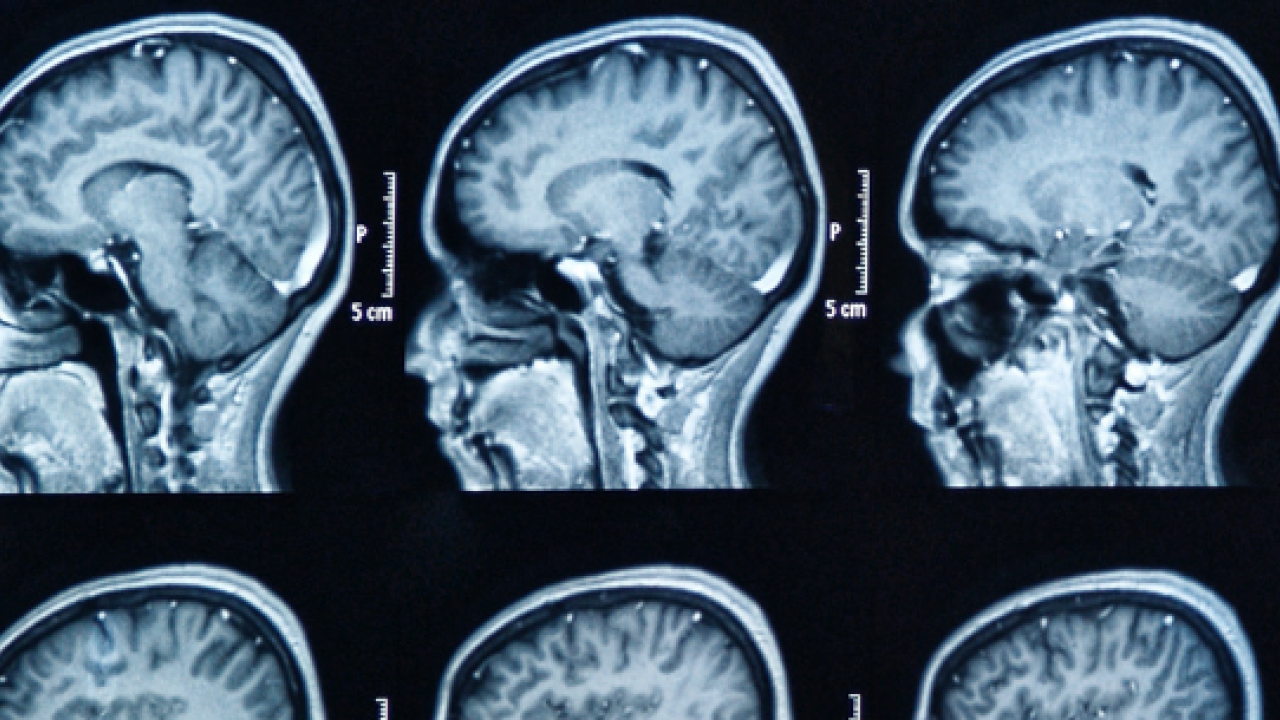
Sophisticated diagnostic techniques, such an encephalograms (EEGs), video-EEG telemetry, computed tomography (CT), magnetic resonance imaging (MRI), positron emission tomography (PET), and functional MRI, are used to assess epilepsy.
Risk Factors
Sometimes, a clear cause of epilepsy can be identified. A common cause of epilepsy is head injury due to an automobile accident or gunshot wound, and other causes include stroke, infection, poisoning, brain tumors, vascular malformations, and developmental abnormalities of the brain. In some cases, epilepsy is genetic. Several types of epilepsy, such as temporal lobe epilepsy, can be cured with surgery, while other types are best treated with medication.
Treatments
Generalized epilepsy
Because these seizures are generalized and do not have a single initiation point, they cannot be cured with surgery, but still may be improved with surgery, such as vagal nerve stimulation and corpus callosotomy. Most patients, particularly those with idiopathic generalized seizures, respond well to anticonvulsant medication.
Partial (or Focal) epilepsy
Close to 50% of patients with partial epilepsy are not completely controlled by medication. Many are amenable to surgery because the source of the seizures can be identified and safely removed. Often defined by their point of origin, partial epilepsy includes frontal lobe epilepsy, occipital lobe epilepsy, mesial temporal lobe epilepsy, and parietal lobe epilepsy.